Sinoe Medical Association

Sinoe Medical Association

USMLE Step 1 & Step 2 CK Integrated Review Program Syllabus


Program Title: Integrated USMLE Step 1 and Step 2 CK Review Program


Program Type: High-yield medical board review


Audience: International medical graduates, medical students, residents, and physicians preparing for USMLE Step 1 and/or Step 2 CK

Format: Live lectures, recorded review, question-based learning, clinical case discussion, exam strategy, and weekly assessments

Recommended Duration: Depends on your level , required an NBME test first.

Duration can go from 3 months to 6 months.


 Danil Hammoudi, MD / Sinoe Medical Association Faculty and owner
________________________________________

Program Description


This integrated USMLE review program is designed to help students master the foundational sciences required for USMLE Step 1 and the clinical reasoning required for USMLE Step 2 CK.

The program emphasizes high-yield mechanisms, pathology, pharmacology, physiology, microbiology, clinical diagnosis, management, ethics, biostatistics, and patient-safety principles.


The curriculum follows the official USMLE framework, which recommends using both the USMLE Content Outline and the Physician Tasks/Competencies documents when preparing for Step examinations.

For current testing structure, Step 1 remains a one-day examination; for examinees testing on or after

 it is divided into fourteen 30-minute blocks during an 8-hour testing session.

Step 2 CK is also a one-day examination; for examinees testing , it is divided into sixteen 30-minute blocks during a 9-hour testing session.  

Program Goals


By the end of this program, students should be able to:

1. Master high-yield basic science concepts tested on USMLE Step 1.

2. Apply pathology, physiology, microbiology, immunology, and pharmacology to clinical vignettes.

3. Build Step 2 CK-level clinical reasoning for diagnosis, workup, treatment, prevention, and prognosis.

4. Improve performance on NBME-style and UWorld-style questions.

5. Recognize common exam traps, distractors, and “next best step” patterns.

6. Strengthen clinical decision-making in internal medicine, surgery, pediatrics, OB/GYN, psychiatry, emergency medicine, ethics, and preventive care.

7. Develop a structured study strategy, test-taking method, and final exam-readiness plan.  

Required and Recommended Materials


Required
• First Aid for the USMLE Step 1
• UWorld Step 1 QBank
• UWorld Step 2 CK QBank
• NBME self-assessments
• Official USMLE Content Outline and Physician Tasks/Competencies

Recommended
• Pathoma +/-
Sketchy Microbiology and Pharmacology
• Boards & Beyond or equivalent physiology/pathophysiology resource
Amboss or similar clinical reference

.Medbullets


• OnlineMedEd or equivalent Step 2 CK clinical review

• Personal error log notebook  

Lectures, video's, practical question.
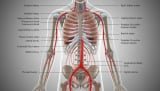
How to study for the USMLE

-Click here to see the video 
-Click  here for our podcast 
-How to study for the USMLE step 1 step 2
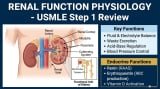
Our youtube video cases

Lorem ipsum dolor sit amet, consectetur adipiscing elit. Praesent vitae erat. Integer aliquam, lorem vitae dapibus sollicitudin, nibh nisl egestas enim, ut dapibus odio augue venenatis mi. Ut tempus dui at mi semper, vel dapibus nisl consectetur. Phasellus consectetur sapien non lacus imperdiet dapibus. In facilisis sed mi rutrum consequat. Sed augue sem diam.
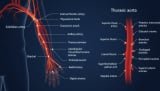
Our Podcasts

Lorem ipsum dolor sit amet, consectetur adipiscing elit. Praesent vitae erat. Integer aliquam, lorem vitae dapibus sollicitudin, nibh nisl egestas enim, ut dapibus odio augue venenatis mi.
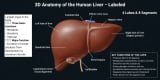
USMLE PRACTICAL QUESTION FOR STEP 1

Systems:

Cardiovascular
Respiratory
Renal
GI/Liver
Endocrine
Reproductive
Neurology
Musculoskeletal
Hematology/Oncology
Infectious disease

Advanced Clinical Reasoning


Complex clinical cases
Mechanism-based questions
Differential diagnosis drills
Ethics and communication questions
Biostatistics review

Lectures STEP 1

Systems:

Cardiovascular
Respiratory
Renal
GI/Liver
Endocrine
Reproductive
Neurology
Musculoskeletal
Hematology/Oncology
Infectious disease
USMLE PRACTICAL QUESTION FOR STEP 2

Diagnostic + Internal Medicine I
Baseline Step 2 CK diagnostic 

Cardiovascular
Respiratory
Renal
Electrolytes and acid-base

 Internal Medicine II
GI/Liver
Endocrine
Hematology/Oncology
Infectious Disease
Rheumatology

 Pediatrics
Newborn disorders
Pediatric infections
Growth/development
Congenital disease
Pediatric emergencies
Vaccines and screening

 OB/GYN + Psychiatry
Normal pregnancy
Obstetric emergencies
GYN bleeding
Infertility and contraception
Depression, bipolar, psychosis
Suicide risk
Substance use


 Surgery + Emergency + Neurology
Trauma
Acute abdomen
Surgical complications
Stroke
Seizure
Headache
Weakness
Altered mental status


Final Exam Integration
Ethics
Patient safety
Biostatistics
Preventive medicine
Full mixed blocks

Assessment Plan

Assessment   Type     Frequency      Purpose
Diagnostic exam Week 1 Identify baseline strengths and weaknesses
l
Block exams Every 2–3 weeks Simulate exam conditions

NBME/self-assessment review Midpoint and final weeks Measure readiness  you might take one every two weeks or once a months depending on you length of study

Error-log review Weekly Correct repeated mistakes
Final comprehensive exam Last week Determine exam readiness

Assessment Plan

Sinoe Medical Association USMLE Step 1 & Step 2 CK Review Program

1. Initial Diagnostic Assessment

Before starting the program, each student completes an initial evaluation to identify strengths, weaknesses, and readiness level.

Components:

Student intake form
Prior USMLE attempt history, if applicable
Target exam date
Current resources used: UWorld, AMBOSS, First Aid, NBME, CMS forms
Baseline self-assessment of weak subjects
Diagnostic question set or recent NBME/UWorld report review

Purpose:

Determine the student’s starting level
Identify major gaps in knowledge
Create a personalized study plan
Place student in the correct level: beginner, intermediate, advanced, or remediation
2. Baseline Testing

For Step 1

Baseline testing should include:

40–80 mixed basic science questions
Review of core disciplines:
Pathology
Physiology
Pharmacology
Microbiology
Biochemistry
Immunology
Behavioral science
Genetics


For Step 2 CK

Baseline testing should include:

40–80 mixed clinical questions
Review of major clinical systems:
Internal medicine
Surgery
Pediatrics
OB/GYN
Psychiatry
Emergency medicine
Preventive medicine
Ethics and communication

Recommended grading:

Score Interpretation
75% or higher   Advanced preparation
65–74%             Moderate readiness
50–64%             Needs structured review
Below 50%        High-risk student; intensive remediation needed

Teaching Method


Each session uses a four-layer approach:
1. Concept Review – mechanism, pathogenesis, physiology, pharmacology
2. Clinical Application – symptoms, labs, imaging, diagnosis
3. Question-Based Learning – NBME/UWorld-style cases, From easy to very complicated, from one system to multiple in the same time.
4. Exam Strategy – elimination, red flags, traps, timing, and pattern recognition, KEY WORDS
________________________________________ 

Personal error log notebook for USMLE

To create a personal error log notebook for USMLE, consider the following steps:
Identify Error Types: Recognize the four types of errors that dominate your score loss and categorize them accordingly.

-Use a Structured Framework: Implement a framework like the R.A.C.E. Error Log (Record, Analyze, Correct, Eliminate) to systematically track and analyze your mistakes.

-Create a Digital Notebook: Utilize tools like My Notebook to organize your notes and review material effectively. This can help you summarize clinical concepts in your own words and integrate QBank content.

-Track Progress: Regularly update your error log to monitor your progress and identify recurring patterns or weak areas in your study.

-Focus on Retention: Use your error log to develop a deeper understanding of concepts and avoid repeated mistakes by focusing on the specific topics that cost you points.


By following these steps, you can effectively track your errors and improve your USMLE preparation.


 Sources:   Residency Advisor  Note-Taking Made Easy  QuantaPrep

Offline Website Builder